Student/Faculty Feedback Facility in AICTE Web Portal | Commencement of B.Tech First-Year Session 2026–27 from 8 July 2026NEW | International Conference - MBA (ICRIPI-2026) | IEEE International Conference on Computational Intelligence for Sustainable Solutions (ICCISS-2027) | International Conference on Integrated Carbon and Sustainability (ICICS-26)

Course Description

KIET has launched a new undergraduate program-B. Tech in Electronics & Communication Engineering (VLSI Design & Technology) with an annual intake of 30 students. This program is designed in alignment with the rapidly evolving semiconductor and chip design industry.

The program aims to prepare students for high-demand roles in the semiconductor industry by offering a curriculum that blends core ECE subjects with specialized courses in VLSI, ASIC/FPGA design flow, physical design, verification, and design for testability. With industry-oriented training and expert faculty mentorship, students will graduate with strong technical foundations and practical skills to contribute to next-generation chip design and electronics innovation. The program is backed by a team of highly qualified faculty members with PhDs and M.Tech degrees from reputed institutes such as IITs, NITs, and DTU.

Vision

To become a globally recognized centre of VLSI Design and Technology by fostering innovation, research, skill-based education, ethical values, and sustainable semiconductor technologies for societal advancement.

Mission

  • Deliver learner-centric and technology-enabled education that develops strong fundamentals and advanced competencies in VLSI Design and Semiconductor Technology.
  • Promote interdisciplinary research, innovation, entrepreneurship, and industry collaboration in emerging semiconductor and electronic system technologies.
  • Develop globally competent, industry-ready professionals through experiential learning, advanced design tools, internships, and lifelong learning.
  • Nurture ethical values, leadership, environmental consciousness, and social responsibility for sustainable technological development.

Program Outcomes

  • Engineering Knowledge: Apply knowledge of mathematics, natural science, computing, engineering fundamentals and an engineering specialization as specified in WK1 to WK4 respectively to develop to the solution of complex engineering problems.
  • Problem Analysis: Identify, formulate, review research literature and analyze complex engineering problems reaching substantiated conclusions with consideration for sustainable development. (WK1 to WK4)
  • Design/Development of Solutions: Design creative solutions for complex engineering problems and design/develop systems/components/processes to meet identified needs with consideration for the public health and safety, whole-life cost, net zero carbon, culture, society and environment as required. (WK5)
  • Conduct Investigations of Complex Problems: Conduct investigations of complex engineering problems using research-based knowledge including design of experiments, modelling, analysis & interpretation of data to provide valid conclusions. (WK8).
  • Engineering Tool Usage: Create, select and apply appropriate techniques, resources and modern engineering & IT tools, including prediction and modelling recognizing their limitations to solve complex engineering problems. (WK2 and WK6)
  • The Engineer and The World: Analyze and evaluate societal and environmental aspects while solving complex engineering problems for its impact on sustainability with reference to economy, health, safety, legal framework, culture and environment. (WK1, WK5, and WK7).
  • Ethics: Apply ethical principles and commit to professional ethics, human values, diversity and inclusion; adhere to national & international laws. (WK9)
  • Individual and Collaborative Team work: Function effectively as an individual, and as a member or leader in diverse/multi-disciplinary teams.
  • Communication: Communicate effectively and inclusively within the engineering community and society at large, such as being able to comprehend and write effective reports and design documentation, make effective presentations considering cultural, language, and learning differences
  • Project Management and Finance: Apply knowledge and understanding of engineering management principles and economic decision-making and apply these to one’s own work, as a member and leader in a team, and to manage projects and in multidisciplinary environments.
  • Life-Long Learning: Recognize the need for, and have the preparation and ability for i) independent and life-long learning ii) adaptability to new and emerging technologies and iii) critical thinking in the broadest context of technological change. (WK8)

Dean's Message

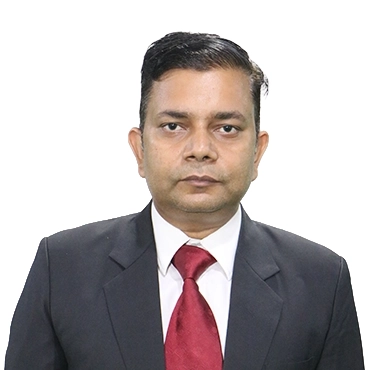
Prof. (Dr.) Vibhav Kumar Sachan

Prof. (Dr.) Vibhav Kumar Sachan

Esteemed visitors, welcome to the Department of Electronics and Communication Engineering at KIET.

In today’s rapidly evolving technological landscape, Electronics and Communication Engineering remain a driving force, propelling innovation across countless sectors. Established in 1998, our department has a rich history of academic excellence and impactful research. We proudly offer two undergraduate programs: Electronics & Communication Engineering (with an intake of 180 students) and Electronics & Communication Engineering – VLSI Design and Technology (with an intake of 30 students). Here at KIET, we are dedicated to providing a transformative educational experience. Our curriculum is meticulously crafted to provide a robust foundation in core electronics principles, while simultaneously offering avenues for specialization in cutting-edge domains such as VLSI Design, Embedded Systems, Signal Processing, System Engineering and Wireless Communication Systems. We place a strong emphasis on hands-on learning, utilizing state-of-the-art laboratories, design projects, and collaborations with industry partners, ensuring that our graduates are exceptionally well-prepared to address real-world challenges.

We cultivate a vibrant learning environment that fosters intellectual curiosity, critical thinking, and collaborative problem-solving. Our dedicated faculty members are not only leading experts in their fields but also passionate educators committed to mentoring and guiding our students towards success. We strongly encourage research and innovation, providing ample opportunities for students to participate in cutting-edge research projects alongside our faculty. The department actively organizes national and international events, including conferences, short-term courses, summer schools, and workshops. Our department is committed to producing high-quality publications in esteemed national and international journals and conferences. In recent years, we have established a strong track record of securing design and product patents.

As Dean of the Department, I am immensely proud of our students, faculty, and alumni, who are making significant contributions to the advancement of electronics engineering and shaping the future of technology. I invite you to explore our website and discover more about our programs, research endeavors, and the exciting opportunities that await you at the Department of Electronics and Communication Engineering. We believe in Alan Kay’s powerful statement: “The best way to predict the future is to invent it.” This belief fuels our dedication to groundbreaking research and transformative education in Electronics and Communication Engineering.
Faculty

Faculty Image
S.NoRankCount
1PROFESSOR2
2ASSOCIATE PROFESSOR1
3ASSISTANT PROFESSOR2
4PROFESSOR OF PRACTICE1
5ADJUNCT FACULTY1
S.NoNameDesignation
1Dr. Vibhav Kr. SachanProfessor, Dean
2Dr. Abhishek SharmaProfessor, Program Head -I Year
3Dr. Praveen KumarAssociate Professor
4Dr. Reena SharmaProfessor of Practice
5Mr. Mukesh KumarAdjunct Faculty

Publications & Research

Hover on the year markers to view research detailsTap on the year markers to view research details
Publications and Research Roadmap
22-23
23-24
24-25
25-26
Overall Research Summary
S.NoPublicationCategoryCount
1Journal19
2Conference38
3Book1
4Patent (Published)5
5Ph.D Guidance7
Books Published
Journals Published
Conferences
Ph.D Guidance

Class Room

We have well-equipped class rooms with smart touch boards, audio system and internet facilities.

Labs

State-of-the-art labs equipped with industry-grade software and hardware support immersive training in core and advanced ECE-VLSI domains.

  • CO & LD Lab / Digital System Design Lab
  • IoT & Embedded System Lab
  • VLSI Design Lab & CAD Lab
  • Project Lab / E-Yantra Lab

Placement

Centre of Excellence

Centre of Excellence For Advanced VLSI Design

Centre of Excellence For Advanced VLSI Design

The Centre of Advanced VLSI Design, established by the Department of Electronics and Communication Engineering at KIET, is committed to enhancing education, research, and hands-on skill development in VLSI.

Testimonials

Clubs

ECE VLSI Design Club (EVDC)

ECE VLSI Design Club (EVDC)

The club operates under the Centre of Advanced VLSI Design, Department of Electronics and Communication Engineering. The club aims to provide students with a strong platform to explore, learn, and gain hands-on experience in Very-Large-Scale Integration (VLSI) design.
Syllabus

ECE(VLSI) I YEAR

Important Links

Register For Admission 2026–27