Student/Faculty Feedback Facility in AICTE Web Portal | Even Sem Registration (2025-26) - B.Tech, B.Pharm (3rd & 4th year) & MCA (1st & 2nd year) | Even Sem Registration (2025-26) - B.Tech (1st & 2nd year), B.Pharm ( 2nd year), MBA, M.Tech & M.Pharm (1st & 2nd year)

Course Description

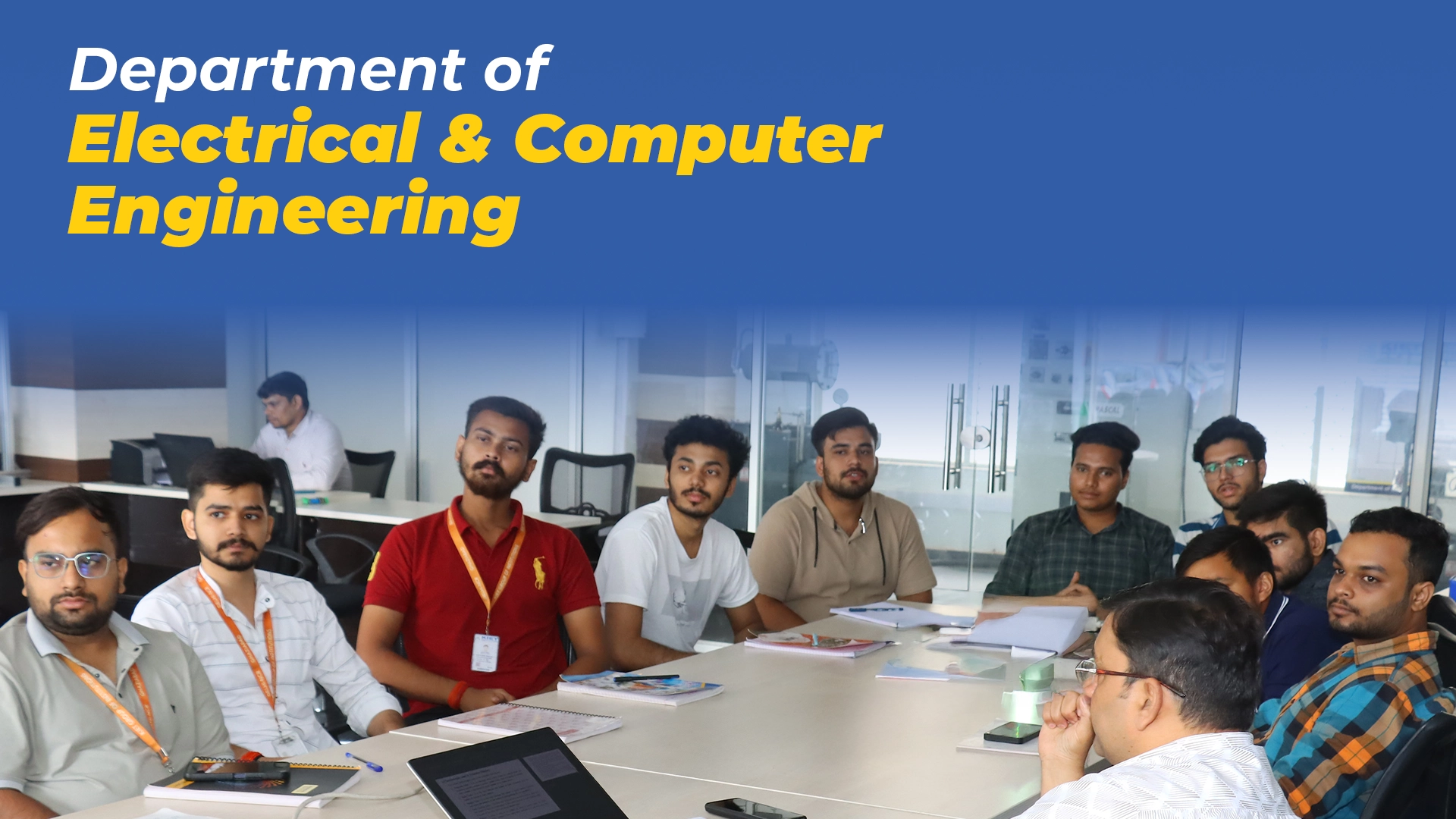
The Department of Electrical and Computer Engineering (ELCE) is a hub of innovation, research, and academic excellence. Our mission is to empower students with cutting-edge knowledge and skills, foster interdisciplinary research, and develop future-ready professionals who excel in solving real-world challenges.

Key Focus Areas:

1: Power and Energy Systems: Smart grids, renewable energy, and sustainable solutions.

2: Computer Systems and Software Development: Embedded systems, AI, and IoT.

3: Robotics and Automation: Industrial robotics and autonomous systems.

4: Advanced Communication Networks: 5G, IoT, and next-gen communication technologies.

5: Space and Aviation Technologies: Systems design for aerospace and satellite communication.

6: Electric Vehicles and Smart Mobility: EV systems, battery management, and intelligent transport.

7: Biomedical Instrumentation: AI-driven diagnostics, healthcare systems, and wearable technologies.

Key Highlights:
  • Innovative and Next Generation Curriculum: A robust 160-credit B.Tech. program with a unique blend of electrical and computer engineering courses, integrated with industry trends.
  • Hands-On Learning: State-of-the-art labs for practical exposure to advanced technologies through project-based learning experiences.
  • Industry Collaboration: Partnerships with leading organizations for internships, live projects, and research.
  • Research Excellence: Active participation in multidisciplinary research areas like AI, Industry 5.0, and sustainable energy solutions.
  • Career-Ready Graduates: Strong focus on skill development, entrepreneurship, and employability.
  • State-of-the-Art and Advanced Research Labs: Real-time Data Acquisition and Analytics lab, AI & IoT lab, Advanced Power and Energy Systems lab, E-Mobility Lab, Robotics lab, and many more.
  • Collaborative Spaces: Innovation hubs for interdisciplinary projects.
  • Digital Learning Resources: High-tech classrooms and virtual labs.

Vision

To become a leader in fostering innovation and research for sustainable electrical and computer engineering solutions to address global challenges and serve humanity.

Mission

  • To equip students with cutting-edge technical knowledge and creativity in Electrical and Computer Engineering.
  • To establish strong partnerships with global industries for providing practical and real-world learning.
  • To provide a conducive environment for impactful research that addresses modern challenges and advances in AI-driven technologies and automation.
  • To develop a sustainable ecosystem that nurtures globally competent professionals and leaders.

Program Outcomes

  • Engineering Knowledge: Apply knowledge of mathematics, natural science, computing, engineering fundamentals and an engineering specialization as specified in WK1 to WK4 respectively to develop to the solution of complex engineering problems.
  • Problem Analysis: Identify, formulate, review research literature and analyze complex engineering problems reaching substantiated conclusions with consideration for sustainable development. (WK1 to WK4)
  • Design/Development of Solutions: Design creative solutions for complex engineering problems and design/develop systems/components/processes to meet identified needs with consideration for the public health and safety, whole-life cost, net zero carbon, culture, society and environment as required. (WK5)
  • Conduct Investigations of Complex Problems: Conduct investigations of complex engineering problems using research-based knowledge including design of experiments, modelling, analysis & interpretation of data to provide valid conclusions. (WK8)
  • Engineering Tool Usage: Create, select and apply appropriate techniques, resources and modern engineering & IT tools, including prediction and modelling recognizing their limitations to solve complex engineering problems. (WK2 and WK6)
  • The Engineer and The World: Analyze and evaluate societal and environmental aspects while solving complex engineering problems for its impact on sustainability with reference to economy, health, safety, legal framework, culture and environment. (WK1, WK5, and WK7)
  • Ethics: Apply ethical principles and commit to professional ethics, human values, diversity and inclusion; adhere to national & international laws. (WK9)
  • Individual and Collaborative Team work: Function effectively as an individual, and as a member or leader in diverse/multi-disciplinary teams.
  • Communication: Communicate effectively and inclusively within the engineering community and society at large, such as being able to comprehend and write effective reports and design documentation, make effective presentations considering cultural, language, and learning differences
  • Project Management and Finance: Apply knowledge and understanding of engineering management principles and economic decision-making and apply these to one’s own work, as a member and leader in a team, and to manage projects and in multidisciplinary environments.
  • Life-Long Learning: Recognize the need for, and have the preparation and ability fori) independent and life-long learning ii) adaptability to new and emerging technologies and iii) critical thinking in the broadest context of technological change. (WK8)

Dean's Message

Welcome to the Department of Electrical and Computer Engineering (ELCE) at KIET, Ghaziabad.

It gives me immense pleasure to welcome you to a department that is dedicated to delivering high-quality education, fostering innovation, and nurturing excellence in the rapidly advancing domains of Electrical and Computer Engineering.

In today’s era of technological transformation driven by Artificial Intelligence, Machine Learning, Automation, and Digital Engineering, our mission is to prepare students who are not only technically proficient but also ethically grounded, innovative, and globally competent. The B.Tech. programme in Electrical and Computer Engineering is carefully structured to equip students with the skills, knowledge, and vision required to excel in both industry and academia.

Our strength lies in our committed faculty members, advanced laboratories, and robust industry collaborations. The department proudly features AI and ML–driven Software Computational Laboratories that provide students with hands-on experience in next-generation technologies. Students also engage in innovative live projects sponsored by industry, enabling them to solve real-world challenges, gain industry exposure, and build strong professional competencies.

We believe that education extends far beyond the classroom. Students are encouraged to participate in cutting-edge research, internships, professional workshops, and collaborative projects. These opportunities help them convert theoretical understanding into practical solutions and prepare them for leadership roles in emerging technological landscapes.

Our department consistently ensures excellent placement opportunities, supported by strong corporate linkages and the development of human values. We emphasize human ethics, professional integrity, social responsibility, and holistic development, ensuring that our graduates succeed not only in their careers but also as responsible global citizens.

At ELCE, you will be part of a vibrant academic ecosystem that fosters creativity, critical thinking, teamwork, and lifelong learning. Regular seminars, expert talks, and industry interactions help students stay aligned with global trends and build strong professional networks. On behalf of the department, I warmly welcome you and wish you a fulfilling, inspiring, and rewarding academic journey with us.

- Dr. Neeraj Kumar Gupta

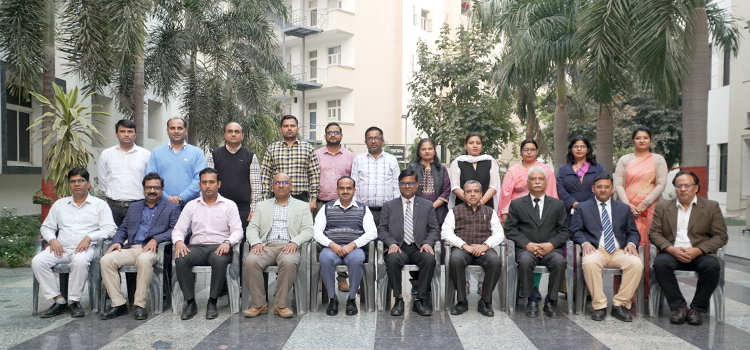
Faculty

Faculty Image
S.NoRankCount
1PROFESSOR5
2ASSOCIATE PROFESSOR6
3ASSISTANT PROFESSOR13
4PROFESSOR OF PRACTICE1
5ADJUNCT FACULTY2
S.NoNameDesignation
1Dr. Neeraj Kumar GuptaProfessor & Dean ELCE
2Dr. Arvind Kumar SharmaProfessor & Head-HCC
3Dr. Yaduvir SinghProfessor & Program Head
4Dr. Satish KumarProfessor
5Dr. Nitin Kumar SaxenaProfessor
6Dr. Jyoti SrivastavaAssociate Professor
7Dr. Rahat U KhanAssociate Professor
8Dr. Masood RizviAssociate Professor
9Dr. Ruchika SinghAssociate Professor
10Dr. Surendra Kumar TripathiAssociate Professor
11Dr. Md. Shariz AnsariAssociate Professor
12Dr. Ameer FaisalAssistant Professor
13Dr. SalimAssistant Professor
14Dr. SheetalAssistant Professor
15Dr. Rajeev KumarAssistant Professor
16Prof. Varun SharmaAssistant Professor
17Dr. Sourav DiwaniaAssistant Professor
18Prof. Kapil GandhiAssistant Professor & Program Head (I Year)
19Dr. Snigdha ChaturvediAssistant Professor
20Dr. BandanaAssistant Professor
21Dr. Vanya GoelAssistant Professor
22Dr. Ankur MaheshwariAssistant Professor
23Dr. Bhuvan SharmaAssistant Professor
24Dr. Sindhu BhaskarProfessor Of Practice
25Mr. Ashish D. ThombreAdjunct Faculty
26Mr. Arun Kumar YadavAdjunct Faculty
27Mr. Praveen Kumar TyagiSr. Lab In-charge
28Mr. Krishna Pratap SinghLab Instructor (II)
29Mr. Prakash Chandra ThakurLab Instructor (II)
30Mr. PrempalLab Instructor (II)
31Mr. Pratipal SinghLab Instructor (II)
32Mr. Girish DuttLab Instructor (II)
33Mr. Anil Kumar KushwahaLab Instructor (I)
34Mr. Umesh Kumar MishraLab Technician (II)
35Mr. Amit KumarLab Technician (II)
36Mr. Lalit KumarOfficer
37Mr. Sanju Singh (ELCE)Sr. Executive (Academic Support)

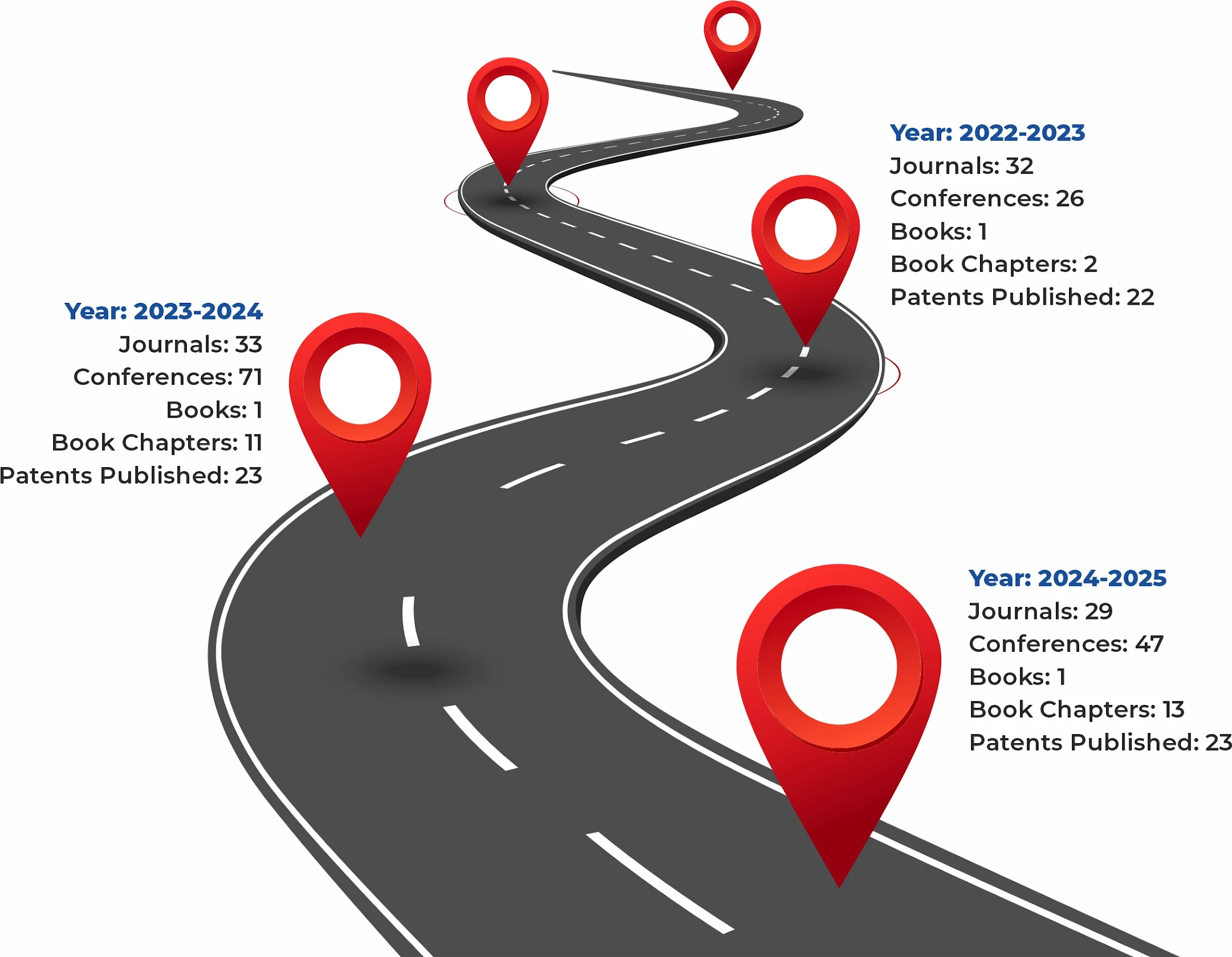
Publications & Research

publications and research
1
2
3
Overall Research Summary
S.NoPublication CategoryCount
1Journal18
2Conference19
3Book1
4Book Chapter1
5Patent Published4
6Patent Granted9
7Ph.D Guidance5

Class Room

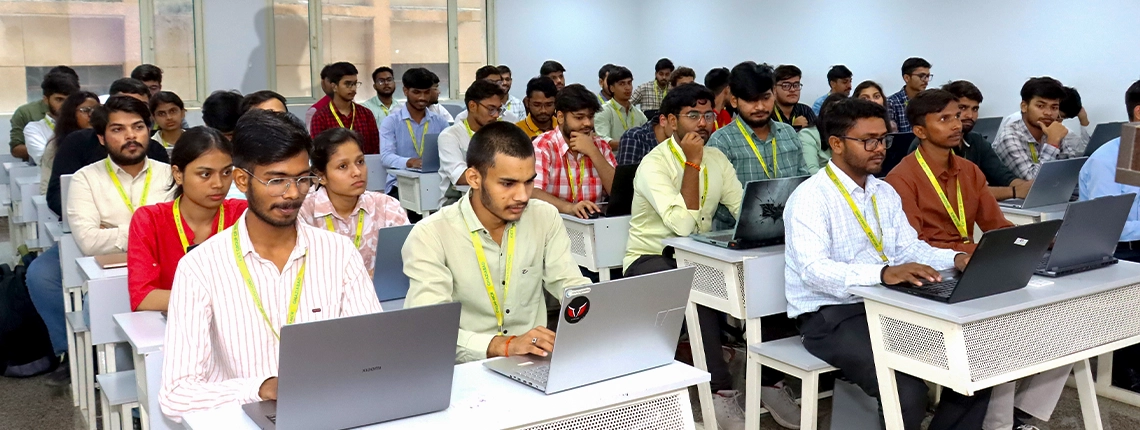
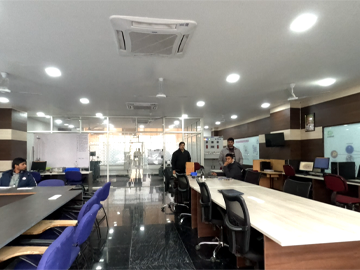
We have well-equipped class rooms with smart touch boards, audio system and internet facilities.

ClassRoom

Labs

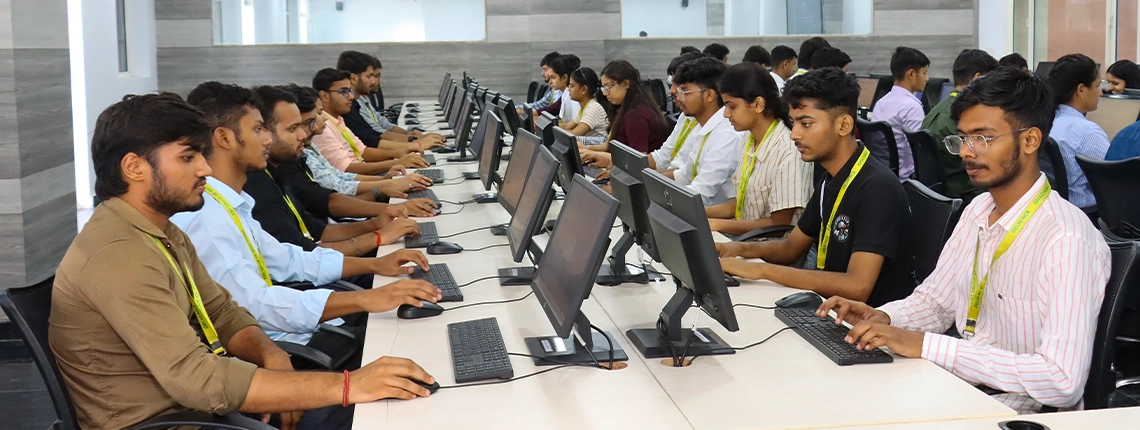
Students engage with advanced laboratories, including Power Systems, Power Electronics, Embedded Systems, Instrumentation and Measurement, and Computer-Aided Design. Platforms like MATLAB, LabVIEW, CATIA, and OPAL-RT simulate real-world scenarios, bridging theory and practice seamlessly.

  • Data structure Lab : Hands-on implementation of fundamental data structures to build efficient and optimized algorithms.
  • Python for Engineers Lab : Practical coding sessions using Python to solve engineering problems with simplicity and efficiency.
  • Microprocessors Lab : Provides hands-on training in microprocessor and microcontroller programming, interfacing, and embedded system applications.
  • Power Electronics Lab : Equipped with converters, inverters, and experimental setups to study switching devices and power electronic circuits used in modern electrical systems.
  • Electrical Machine Lab : Facilitates practical experiments on DC machines, induction motors, transformers, and synchronous machines to understand their characteristics and performance.
  • Power Systems Laboratory : Offers simulation and analysis tools for power generation, transmission, distribution, load flow studies, and system stability assessments.
  • Electric Drives & Control System Laboratory : Provides exposure to motor drive systems, controllers, and feedback mechanisms used in industrial automation and motion control applications.
  • Industrial Automation & PLC Lab : Trains students in programmable logic controllers, SCADA systems, and industrial automation techniques widely used in manufacturing industries.
  • IoT and Embedded Systems Laboratory : Focuses on sensor integration, IoT platforms, and embedded system development for smart automation, monitoring, and real-time applications.
  • Measurement Embedded system Lab : Equipped for precision measurement, instrumentation experiments, and embedded system prototyping using modern tools and microcontrollers.
  • Simulation platforms: MATLAB, LabVIEW, CATIA, OPAL-RT, MULTISIM, PSAT
Lab image

Placement

    Center of Excellence

    Power and Energy Systems

    Power and Energy Systems

    This Center serves as a dynamic platform that bridges academic learning with real-world industrial applications, enabling students and faculty to engage in live projects, hands-on training modules, and industry-driven research. Equipped with state-of-the-art infrastructure and expert mentorship from Tata Power professionals, the Center empowers students to gain industry-relevant skills.

    E-Mobility

    E-Mobility

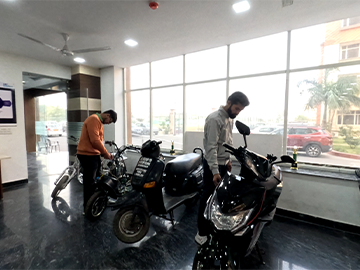
    This is an effort to create a platform for learning while working on the latest technology. Also, the centre provides infrastructure and environment to enhance collaborative research with Industry partners around the globe. Additionally, the centre provides the platform for the students to learn the technology through training, workshops, seminars, conferences, expert talks, schools.

    Testimonials

    Clubs

    Industrial Electronics and Control Club

    Industrial Electronics and Control Club

    This Club provides a dynamic platform for students to apply their innovative ideas and transform them into impactful real-world solutions. The club encourages creativity, hands-on learning, and practical implementation through projects, workshops, and industry-aligned activities.

    Socio Tech Innovation Club

    Socio Tech Innovation Club

    The agenda of this club is to incorporate technical innovations in the minds of the students and provide them the confidence that any idea can be accepted and worked upon. Tech Innovation Club helps to engage students in innovative and creative activities apart from providing opportunities for hands-on activities. The socio tech Innovation club from KIET is proud to announce that their team 'AMBU-The Life Saver' has secured the 5th rank in the prestigious Hack it Sapiens Hackathon in Jaipur.

    Syllabus

    ELCE I YEAR
    ELCE II YEAR

    Important Links

    Register For Admission 2026–27