AKTU Examination Circular - Odd Sem 2025-26 | Celebrating KIET EduVision 5.0 on 3rd Jan 2026 - An Educational Excellence Conclave

Course Description

The B.Tech in Advanced Mechatronics and Industrial Automation is a four-year interdisciplinary program that integrates mechanical, electronics, computer science, control engineering, and AI/ML. Designed in alignment with Industry 4.0 and beyond, the program equips students with cutting-edge knowledge in robotics, smart manufacturing, and cyber-physical systems.

Graduates are prepared for roles in manufacturing, robotics, automotive, aerospace, healthcare automation, and renewable energy industries, with strong career opportunities in both India and global markets.

Key Highlights
  • Future-Proof Career – Tailored for Industry 4.0 & 5.0 industrial revolution.
  • Advanced Technology – Hands-on training with automation leaders like Siemens, ABB, Rockwell, FANUC.
  • Global Opportunities – Alumni well-placed in Germany, Japan, Korea, and the US.
  • Research & Innovation Culture – Guidance for patents, publications & international conferences.
  • Holistic Development – Leadership, ethics, and soft skills integrated into the program.
  • Strategic Location Advantage – Situated in Delhi-NCR (automation hub) for easy access to internships and visits.

Vision

To be recognized as a preferred destination for education and research in mechatronics and industrial automation, producing globally competent innovators and entrepreneurs

Mission

  • Impart strong fundamental education and technology driven hands-on experience in mechatronics and automation through outcome-based learning.
  • Foster interdisciplinary research and innovation to address real-world challenges for sustainable and smart manufacturing.
  • Develop a culture of entrepreneurship and consultancy by encouraging student-industry engagement.
  • Promote continuous professional development of students and faculty members to keep pace with emerging technologies.

Program Outcomes

  • Engineering knowledge: Apply the knowledge of mathematics, science, engineering fundamentals, and an engineering specialization to the solution of complex engineering problems.
  • Problem analysis: Identify, formulate, review research literature, and analyze complex engineering problems reaching substantiated conclusions using first principles of mathematics, natural sciences, and engineering sciences.
  • Design/development of solutions: Design solutions for complex engineering problems and design system components or processes that meet the specified needs with appropriate consideration for the public health and safety, and the cultural, societal, and environmental considerations.
  • Conduct investigations of complex problems: Use research-based knowledge and research methods including design of experiments, analysis and interpretation of data, and synthesis of the information to provide valid conclusions.
  • Modern tool usage: Create, select, and apply appropriate techniques, resources, and modern engineering and IT tools including prediction and modeling to complex engineering activities with an understanding of the limitations.
  • The engineer and society: Apply reasoning informed by the contextual knowledge to assess societal, health, safety, legal and cultural issues and the consequent responsibilities relevant to the professional engineering practice.
  • Environment and sustainability: Understand the impact of the professional engineering solutions in societal and environmental contexts, and demonstrate the knowledge of, and need for sustainable development.
  • Ethics: Apply ethical principles and commit to professional ethics and responsibilities and norms of the engineering practice.
  • Individual and team work: Function effectively as an individual, and as a member or leader in diverse teams, and in multidisciplinary settings.
  • Communication: Communicate effectively on complex engineering activities with the engineering community and with society at large, such as being able to comprehend and write effective reports and design documentation, make effective presentations, and give and receive clear instructions.
  • Project management and finance: Demonstrate knowledge and understanding of engineering and management principles and apply these to one's own work, as a member or leader in a team, to manage projects in multidisciplinary environments.
  • Life-long learning: Recognize the need for, and have the preparation and ability to engage in independent and life-long learning in the broadest context of technological change.

Dean's Message

Welcome to the Department of Mechanical Engineering at KIET. Established in 1999, the department has been committed to delivering quality education and fostering excellence in the field of Mechanical Engineering. Over the past two decades, we have steadily expanded our expertise in core mechanical domains, research, and interdisciplinary learning.

The department aims to equip students with strong technical knowledge, problem-solving abilities, employability skills, and an innovative mindset to address societal and industrial challenges.

With a distinguished record in both teaching and research, the department boasts state-of-the-art laboratories and research facilities. Continuous industry engagement through collaborative projects, industrial visits, expert talks, and discussions on emerging technologies helps create an environment that mirrors real-world engineering applications. To nurture hands-on learning and interdisciplinary interactions, the department conducts regular technical activities and supports student-led hobby clubs such as the SAE-KIET Collegiate Club.

We have also established strategic collaborations with Mercedes-Benz India Ltd., BIESSEE INDIA, Automotive Skill Development Council (ASDC), and 3D Curiosity to enhance skill development initiatives. Our faculty members are academically accomplished, actively involved in research, serve on editorial boards of reputed journals, review scholarly articles, and contribute to national and international conferences, workshops, and seminars.

This website provides a comprehensive overview of our academic programs, research contributions, laboratories, faculty profiles, alumni engagement, and student activities. We invite you to explore and learn more about the vibrant academic environment of the Department of Advanced Mechatronics & Industrial Automation at KIET.

- Dr. Ashish Karnwal
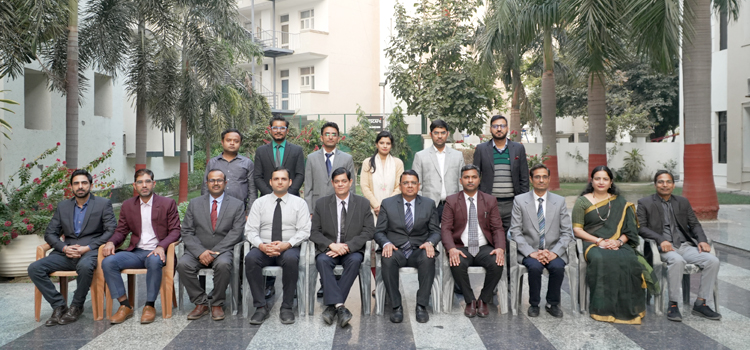
Faculty

Faculty Image

Publications & Research

publications and research
1
2
3
Overall Research Summary

Class Room

The Advanced Mechatronics & Industrial Automation Department features modern, well-equipped classrooms designed to create an engaging and conducive learning environment. Each classroom includes a high-definition Smart TV panel that supports interactive teaching, enabling dynamic visual content and real-time demonstrations, along with a dedicated audio system and internet connectivity. Advanced air-conditioning ensures a comfortable atmosphere, helping students remain focused throughout lectures. Every student workstation is fitted with individual power outlets to support laptops and other electronic devices for simulations, hands-on activities, and project work. Collectively, these facilities provide a contemporary, technology-enhanced space that fosters innovation and elevates the overall academic experience.
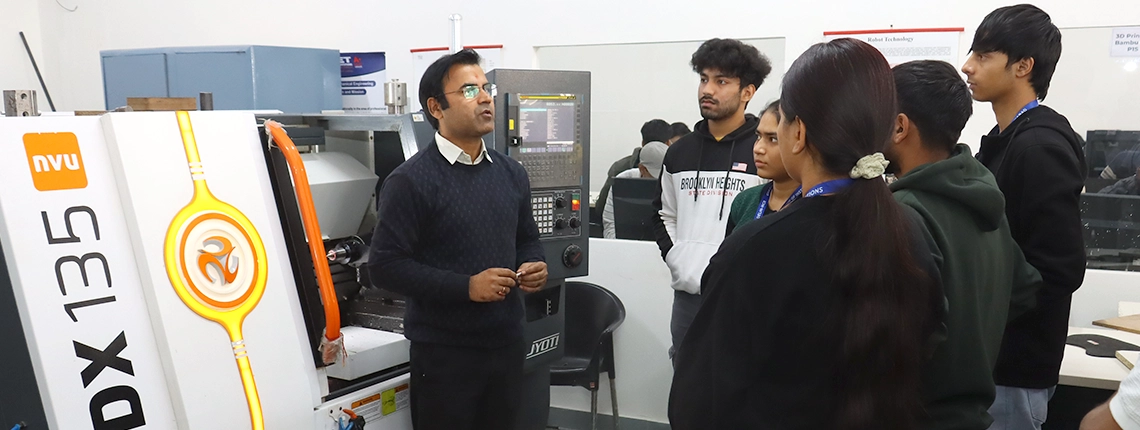
ClassRoom
ClassRoom

Labs

The department houses 3 modern computing labs that support practical training in programming, software development, and research.
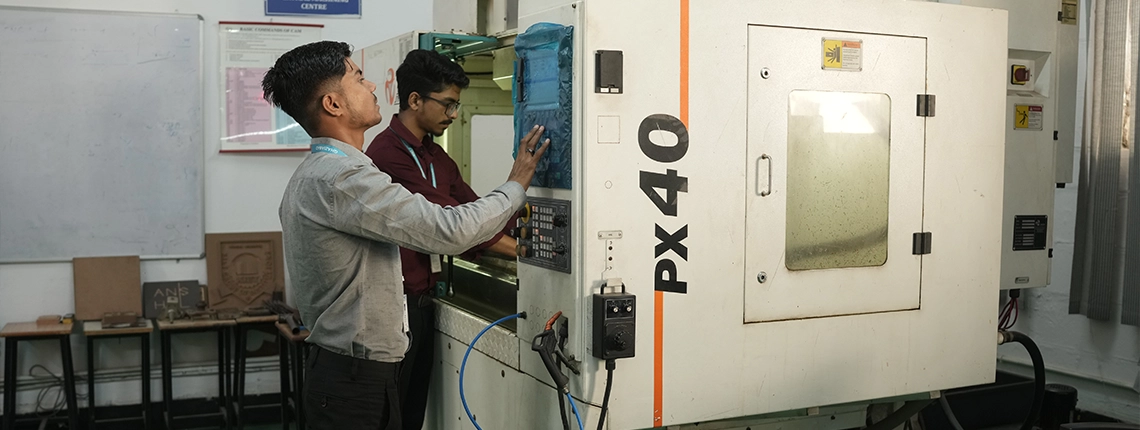
    Lab image

    Placement

      Center of Excellence

      Testimonials

      Clubs

      Syllabus

      Important Links

      Register For Admission 2026–27