
The School of Applied Sciences and Humanities (earlier known as Department of Applied Sciences and Humanities established in 1998) is offering PG Program in M.Sc. (Applied Mathematics and Computing) from the current academic session 2026-27.
The M.Sc. (Applied Mathematics and Computing) is a two-year postgraduate program designed to develop advanced analytical, mathematical, and computational competencies. The curriculum extends beyond theoretical principles by incorporating emerging areas such as mathematical modeling, numerical methods, optimization, data analytics, machine learning foundations, and scientific computing. School also provides the guidance for NET/JRF, GATE, NBHM etc. such national competitive examinations preparation and opportunities for research supports in building strong foundations for their future academic and professional careers.
Students will be given opportunities to attend the conferences and workshops to meet the expectations of academia. The School also facilitates internship opportunities to the students, enabling them to gain practical experience and enhance their employability hereby supporting successful placements at renowned companies.
To establish this department as a base for other department's success and rally round inscribing Institution as a brand name in the country and in global arena. The long sightedness is of creating an indelible mark in the minds of the students for their conceptual approach to look forward towards the Department.
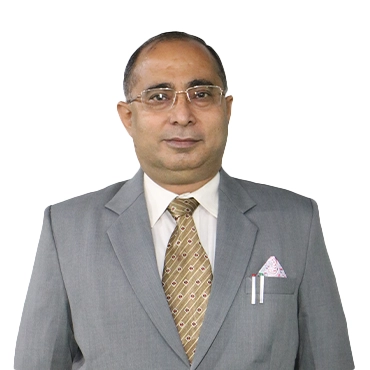
Dr. Chandra Mohan Batra
The School of Applied Sciences & Humanities at Krishna Institute of Engineering & Technology (KIET) Deemed to be University traces its origin to 1998, when it was established as a foundational academic unit working in close synergy with the institute’s engineering disciplines. Over the years, the department has played a pivotal role in the academic growth of the institution, contributing significantly to its evolution into a Deemed to be University in 2025. Today, it stands as a dynamic and integral pillar, empowering both undergraduate and postgraduate learners across diverse domains.
The School introduces M.Sc. in Applied Mathematics and Computing, a programme that integrates mathematical rigor with computational proficiency to meet the demands of data-driven and technology-intensive industries. Additional postgraduate programmes across various disciplines will be introduced soon, further expanding the academic horizon of the School.
The School has been consistently serving as the academic backbone of KIET, contributing to a wide spectrum of engineering disciplines, Pharmacy, and Management. With a strong foundation in Mathematics, Physics, Chemistry, Communication Skills, Humanities, and Professional Readiness, the faculty brings a rich blend of expertise, innovation, and dedication to every field of study.
The School of Applied Sciences & Humanities is committed to nurturing these essential competencies through innovative pedagogy, research-driven learning, and industry-aligned practices, supported by a distinguished faculty across diverse specializations, plays a vital role in sustaining and advancing this tradition.
“Your journey to mastery begins the moment you decide to elevate your learning.”
Join us and shape your future with confidence at KIET University and become the change-makers of tomorrow.
| S.No | Rank | Count |
|---|---|---|
| 1 | PROFESSOR | 7 |
| 2 | ASSOCIATE PROFESSOR | 16 |
| 3 | ASSISTANT PROFESSOR | 20 |
| S.No | Name | Designation |
|---|---|---|
| 1 | Dr. Chandra Mohan Batra | Professor & Head |
| 2 | Dr. Rashid Ali | Professor & Addl. HOD |
| 3 | Dr. Vipin Kumar | Professor |
| 4 | Dr. Ritu Gupta | Professor & Chairperson - ICC |
| 5 | Dr. Sheetal Mital | Professor |
| 6 | Dr. Ekata | Professor |
| 7 | Dr. Sachin Kumar | Professor |
| 8 | Dr. Neelam Sharma | Associate Professor |
| 9 | Dr. Pinky Saxena | Associate Professor |
| 10 | Dr. Kuldeep Sharma | Associate Professor |
| 11 | Dr. Prarthana Srivastava | Associate Professor |
| 12 | Dr. Dhirendra Kumar Sharma | Associate Professor |
| 13 | Dr. Pramod Kumar Sharma | Associate Professor |
| 14 | Dr. Ajay Dixit | Associate Professor |
| 15 | Dr. Kapil Kumar Sharma | Associate Professor |
| 16 | Dr. Priyanka Sharma | Associate Professor |
| 17 | Dr. Sweta Shukla | Associate Professor |
| 18 | Dr. Richa Agarwal | Associate Professor |
| 19 | Dr. Deepti Seth | Associate Professor |
| 20 | Dr. Babita Tyagi | Associate Professor |
| 21 | Dr. Manisha Sharma | Associate Professor |
| 22 | Dr. Sanjay Garg | Associate Professor |
| 23 | Dr. Soniya Verma | Associate Professor |
| 24 | Dr. Soniya Juneja | Assistant Professor |
| 25 | Dr. Bhagwanti S. Bishnoi | Assistant Professor |
| 26 | Dr. Barkha Rohtagi | Assistant Professor |
| 27 | Dr. Archana Sharma | Assistant Professor |
| 28 | Dr. Deepti Goel | Assistant Professor |
| 29 | Dr. Akanksha Agarwal | Assistant Professor |
| 30 | Dr. Archana Sharma | Assistant Professor |
| 31 | Dr. Vipin Kumar | Assistant Professor |
| 32 | Dr. Priyanka Rai | Assistant Professor |
| 33 | Dr. Deepti Chaudhary | Assistant Professor |
| 34 | Dr. Shraddha Srivastava | Assistant Professor |
| 35 | Dr. Annu Rani | Assistant Professor |
| 36 | Ms. Prerna Dhingra | Assistant Professor |
| 37 | Dr. Ruchi Nagaar | Assistant Professor |
| 38 | Dr. Vivek | Assistant Professor |
| 39 | Dr. Vinita Dwivedi | Assistant Professor |
| 40 | Dr. Geeta Chand | Assistant Professor |
| 41 | Dr. Ankita Sharma | Assistant Professor |
| 42 | Dr. Prachi Priya | Assistant Professor |
| 43 | Dr. Vandana | Assistant Professor |

We have well-equipped class rooms with smart touch boards, audio system and internet facilities.
The Semiconductor Physics and Devices Laboratory provide B. Tech. students with a strong experimental foundation in modern electronic and optoelectronic technologies. The lab is designed to help students connect theoretical concepts with real-world device behaviour through a wide range of hands-on experiments.
Important Links
